Vintage Souls: Why Gen Z Is Raiding the '80s and '90s for Identity — and What It's Really Telling Us
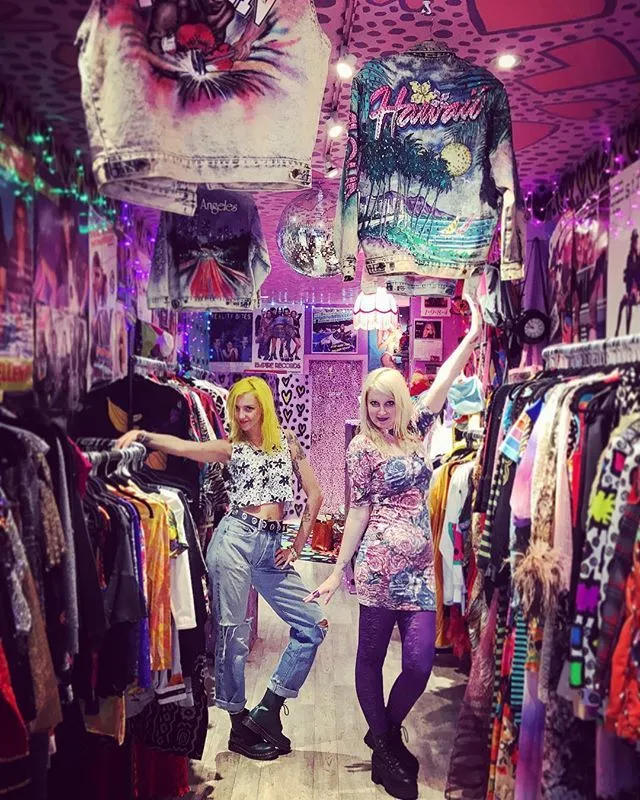
Photo: gen z retro vintage aesthetic 90s fashion thrift store young people, via i.pinimg.com
Walk through any college campus in America right now and you'll see it everywhere. Oversized band tees from acts that broke up before their wearers were born. Chunky sneakers that look lifted straight from a 1994 Foot Locker catalog. Disposable camera photos. Cassette tape aesthetics on digital platforms. A Fleetwood Mac song going viral on TikTok among people who weren't alive when the original album dropped.
Gen Z's infatuation with the culture of the '80s and '90s has become one of the defining aesthetic and social stories of this decade. But reducing it to "a vibe" or a fashion cycle misses something genuinely interesting. This retromania is a symptom of something real — and it's worth taking seriously.
It's Not Just Nostalgia If You Weren't There
First, let's get something out of the way: technically, you can't be nostalgic for something you never experienced. Nostalgia, in its original sense, is about longing for a personal past. What Gen Z is doing is something different — it's more like inherited nostalgia, or what some researchers have started calling anemoia: a wistful feeling for a time you've only encountered through other people's memories.
For a generation raised on YouTube rabbit holes, parents' record collections, and algorithmically surfaced content from decades past, the '80s and '90s aren't ancient history. They're a living archive that's always been one click away. The result is a generation that has an oddly intimate relationship with an era they didn't inhabit — one that feels simultaneously foreign and weirdly familiar.
This is a genuinely new phenomenon. Previous generations also looked backward, but they typically romanticized eras before living memory — the 1920s, the 1950s. Gen Z is doing something more specific: they're gravitating toward their own parents' youth, which creates a kind of cultural feedback loop that's both personal and generational.
What the Past Offers That the Present Doesn't
Here's the uncomfortable question hiding inside all of this: what is it about right now that makes the past look so appealing?
Gen Z came of age during a period of almost relentless instability. The 2008 financial crisis shaped their childhoods. The pandemic defined their adolescence or early adulthood. Social media handed them unprecedented connectivity while simultaneously delivering anxiety, comparison culture, and a 24/7 news cycle that never turns off. Climate anxiety is a genuine psychological presence in many of their lives in a way it simply wasn't for earlier generations.
Against that backdrop, the '80s and '90s — even filtered through the heavily curated, aesthetically pleasing version that exists on Pinterest and Instagram — look like a simpler time. Slower. More tangible. More human. The appeal isn't really about leg warmers or cassette tapes. It's about the idea of a world where you weren't constantly reachable, where culture moved at a pace you could actually keep up with, and where identity wasn't something you had to perform in real time for a global audience.
The past, in other words, offers something the present feels like it can't: breathing room.
The Community Angle Nobody Talks About Enough
There's another dimension to this that gets overlooked in most trend pieces: the social function of retro culture.
Shared aesthetic references create community. When you show up to a party in a vintage Nirvana shirt or you bond with someone over a mutual love of '90s R&B, you're using cultural shorthand to signal belonging. And here's the thing — older cultural references often work better as community-building tools than contemporary ones, precisely because they're less contested.
Contemporary pop culture moves so fast and is so fragmented that it's actually harder to build shared identity around it. There's no monoculture anymore. But the '80s and '90s have been processed, mythologized, and turned into a relatively stable set of references that feel legible across a wide range of people. They're a common language in a moment when common languages are hard to come by.
For a generation that has been diagnosed — fairly or not — with a loneliness epidemic, this matters. Retro culture isn't just aesthetic. It's a way of finding your people.
Is This a Sign of Creative Stagnation?
Okay, let's address the critique, because it's real. Some observers look at Gen Z's retromania and see something less flattering: a mainstream entertainment culture so creatively bankrupt that an entire generation has turned to the past because the present has nothing better to offer.
There's something to this. Hollywood's obsession with sequels, reboots, and IP adaptations has left genuine cultural oxygen for new ideas in short supply. The music industry's algorithmic optimization has arguably narrowed the range of sounds that get serious commercial investment. If the mainstream feels stale, is it any wonder that young people are mining a past that at least had the advantage of being original?
But this critique, while valid, is also incomplete. Gen Z isn't just passively consuming old culture — they're actively remixing it, recontextualizing it, and using it to say new things. The way Gen Z engages with '90s R&B or '80s synth-pop isn't the same as their parents listening to the same music in real time. It's filtered through contemporary sensibilities, contemporary politics, and contemporary tools. That's not stagnation. That's synthesis.
Appreciation or Appropriation?
One more thread worth pulling: not all of the culture Gen Z is reclaiming belongs to the same communities. Some of the most beloved retro aesthetics — particularly in music — have roots in Black American culture, Latino communities, and other groups whose contributions were often minimized or co-opted even at the time. When those sounds and styles get revived, the question of who gets credit and who gets centered matters.
The good news is that Gen Z, as a generation, tends to be more attuned to these questions than their predecessors were. The conversation about credit, attribution, and authentic engagement with borrowed culture is more present in their discourse than it's ever been. Whether that awareness translates into action — actually supporting the artists and communities at the root of what they love — is the ongoing work.
What It All Actually Means
Gen Z's love affair with the past isn't a quirk or a passing trend. It's a cultural response to a very specific set of pressures — a search for community, identity, and breathing room in a present that often feels overwhelming. The '80s and '90s aren't really the point. The longing underneath them is.
And if that longing tells us anything useful, it's this: people need culture that feels human-scaled, tangible, and shared. Whether they find that in the past or someone figures out how to build it in the present is one of the more interesting questions in American culture right now.