Who Needs Friends When You Have Fandoms? The Complicated Truth About Parasocial Living

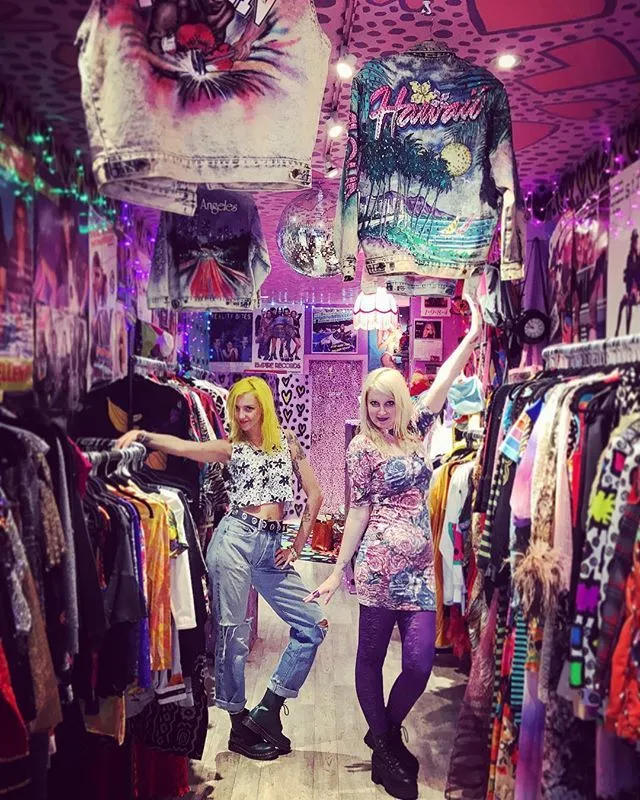
Photo: Shixart1985, CC BY 2.0, via Wikimedia Commons
There's a group chat somewhere in America right now — probably dozens of them — where people are dissecting every detail of their favorite artist's latest interview. Someone stayed up until 2 a.m. to watch a live stream. Someone else skipped a family dinner because a creator they follow was hosting a community event online. And if you asked any of them whether this feels like a real social life, most would say yes, without hesitation.
This is where we are. The line between fandom and friendship has blurred in ways that previous generations couldn't have predicted, and the cultural conversation around it tends to swing between two extremes: either parasocial relationships are deeply pathetic, or they're just modern community-building with a bad reputation. The honest answer lives somewhere messier than either of those takes.
What "Parasocial" Actually Means — And Why It's Not a Slur
The term "parasocial" was coined back in the 1950s by sociologists Donald Horton and Richard Wohl to describe the one-sided emotional bonds audiences form with media personalities. You feel like you know them. You root for them. You grieve when something goes wrong in their life. They have no idea you exist.
For most of the 20th century, parasocial relationships were considered a quirky side effect of television. Now they're a central feature of how millions of people experience social life. Creators on YouTube, Twitch, TikTok, and Substack have built careers specifically on cultivating intimacy — the casual camera angle, the confessional tone, the "just between us" energy that makes a viewer feel like a confidant rather than an audience member.
And it works, because human brains aren't great at distinguishing between repeated, emotionally resonant exposure to a person and actual friendship. The neural pathways light up similarly. The feelings are real, even when the relationship isn't reciprocal.
The Genuine Good Stuff
Before we get into the thornier territory, let's be honest about what parasocial communities actually provide — because dismissing them entirely misses a lot.
For people who are geographically isolated, neurodivergent, dealing with social anxiety, or just living in a place where their interests aren't represented locally, fan spaces can be the only place they find real belonging. A teenager in rural Kansas who's obsessed with K-pop, niche horror fiction, or underground hip-hop isn't going to find their people at school. But they'll find them online, in Discord servers and Reddit threads and comment sections, united by a shared devotion to something.
Those peer connections — the ones formed around a parasocial anchor — are fully social. They're real friendships that just happen to have formed in an unusual context. The creator or artist becomes a kind of cultural campfire that people gather around, and the warmth they feel isn't just reflected off the screen. Some of it comes from each other.
There's also real psychological value in feeling understood by someone, even one-sidedly. Fans frequently describe feeling "seen" by creators who talk openly about mental health, identity, or experiences that mainstream culture ignores. When someone with 3 million subscribers says the thing you've never been able to articulate out loud, that lands. It matters. It can be part of how people figure out who they are.
When the Balance Shifts
Here's where the conversation gets harder. Because there's a difference between a parasocial relationship being part of your social ecosystem and it being the whole ecosystem.
Some warning signs are subtle. You decline invitations because you'd rather catch a creator's live stream. Your emotional state becomes tightly coupled to what's happening in a fictional universe or a celebrity's personal life. You find yourself more comfortable processing feelings through the lens of a fandom than through conversations with actual people in your life. The community chat becomes your primary place of emotional release.
None of these things are inherently catastrophic in isolation. But they can compound into something that quietly replaces the harder, messier work of maintaining real-world relationships — the kind where the other person also has needs, where conflict has to be navigated, where you can't just log off when things get uncomfortable.
Real friendships are inconvenient in ways that fandoms aren't. And that inconvenience is actually part of what makes them nourishing in a different way.
Psychologists who study social connection have noted that parasocial bonds, however emotionally real they feel, don't provide the full spectrum of what humans need from relationships. Reciprocity — being known, being responded to, being chosen — does something for our nervous systems that observation alone can't replicate. When that piece is missing for too long, loneliness tends to grow even inside very active fan communities.
The Creator Side of This Equation
It's worth acknowledging that this dynamic doesn't exist in a vacuum — it's actively designed and monetized. Platforms reward creators for maximizing emotional engagement. Subscription models, Patreon tiers, Discord access passes — all of these are structured to deepen the sense of intimacy and belonging. That's not a conspiracy; it's just business. But it means the environment is optimized to keep you in, not to encourage you to log off and call a friend.
Some creators are genuinely thoughtful about this. They encourage their communities to invest in offline relationships, remind fans that they're not a substitute for therapy or friendship, and set clear boundaries around the parasocial dynamic. Others lean into it hard, because devoted fans are loyal fans are paying fans. Understanding that incentive structure doesn't require cynicism — it just requires awareness.
Finding Your Own Balance
There's no universal threshold for how much fandom is too much. What matters is whether your engagement with parasocial communities is adding to your life or quietly subtracting from it.
A useful gut-check: when something goes wrong — a bad day, a personal crisis, real grief — who do you reach out to? If the honest answer is "I post in the community server" rather than "I call someone who knows me," that's worth sitting with.
It's also worth recognizing that for some people, parasocial communities are a stepping stone. They provide a low-stakes environment to practice connection, find language for your identity, and build confidence that eventually translates into real-world relationships. The goal doesn't have to be abandoning the fandom — it can be letting it coexist with a fuller life.
Fandom, at its best, is a doorway. The question is whether you're walking through it.