Cotton Over Streams: The Real Math Behind Why Artists Are Banking on Merch Instead of Music

Photo by Photo by Frankie Cordoba on Unsplash on Unsplash
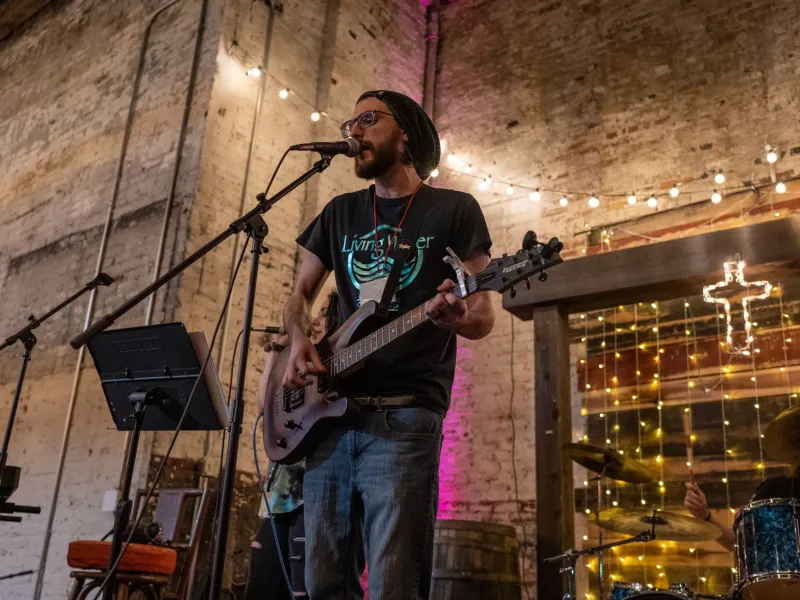
You've probably done it. You're at a show, the energy is electric, and before you've even made it back to your car you're $50 lighter and holding a tote bag with your favorite artist's face on it. Maybe you felt a little guilty about it later. Maybe you didn't even wear the shirt.
But here's the thing — that purchase probably meant more to that artist than the last 50,000 times someone hit play on their biggest track.
Welcome to the merch economy. It's messy, it's surprisingly complex, and it's quietly become the financial backbone of independent music in America.
What Streaming Actually Pays (Spoiler: Not Much)
Let's start with the uncomfortable baseline. Spotify pays somewhere between $0.003 and $0.005 per stream, depending on a whole tangle of factors — your listener's country, whether they're on a free or paid tier, and how Spotify's royalty pool shakes out in any given month. That means an independent artist needs roughly 250,000 streams just to clear a thousand dollars.
For most working musicians in the US, that kind of stream count isn't a given — it's a goal. And even artists who do hit those numbers often find that after their distributor takes a cut and any collaborators are paid out, what lands in their account feels almost insulting compared to the cultural weight of their work.
Apple Music pays slightly better, hovering around $0.01 per stream. Tidal has historically offered more. But the structural reality is the same across all platforms: scale is everything, and most artists — even genuinely beloved ones — don't have it.
The Markup Math on a $40 T-Shirt
Now flip to merch. A standard unisex tee printed through a domestic supplier like Printful or a bulk screen printer in LA or Chicago might cost an artist anywhere from $8 to $14 per unit, depending on fabric quality, print complexity, and order size. Sell that shirt at a show for $40, and you're looking at a gross margin of around 65 to 75 percent before you factor in table staff, venue fees, or shipping.
Even on online platforms like Bandcamp, where the artist-friendly model takes a smaller percentage than most, a $40 shirt might net the artist $30 or more after fees. Compare that to the $0.004 per stream on Spotify and the math becomes almost absurd.
To make what one merch sale brings in, an artist would need their song played roughly 7,500 times.
Seven thousand five hundred times.
Let that sit for a second.
But It's Not All Profit — Not Even Close
Here's where the story gets more complicated, because the merch economy has its own set of friction points that don't always get talked about.
For artists who tour and sell at venues, many major clubs and theaters now take a percentage of merch sales — sometimes 20 to 30 percent off the top. That's a relatively recent shift that's created real tension between artists and venue operators, especially as touring became the primary income source for most working musicians post-streaming. Some artists have started negotiating merch deals into their contracts. Others eat the cut. Smaller acts often don't even know they can push back.
Then there's production. Artists who want quality product — heavyweight cotton, embroidered details, limited-run items that actually feel special — pay more upfront. That means risk. Order 500 shirts and sell 200, and you're storing boxes in your garage and hoping the next run of dates moves product.
And for artists who go through a major label's merch division or a company like Live Nation's Merchandise arm? The splits can get ugly fast. Some deals historically signed artists to 360 arrangements that handed over significant merch revenue in exchange for tour support and marketing. The artist's name is on the shirt, but a meaningful chunk of what fans spend goes somewhere else.
Why Fans Are Spending — and What They're Actually Buying
From the fan side, the merch boom reflects something interesting about how American audiences relate to the artists they love. Buying a hoodie or a hat isn't just commerce — it's participation. It's a wearable signal that says I was there or I belong to this thing.
That identity function is powerful, and artists who understand it are designing merch accordingly. Limited drops, tour-exclusive colorways, items tied to specific albums or moments — these aren't just product strategies, they're community rituals. Scarcity creates urgency. Storytelling creates attachment.
The artists doing it best right now aren't treating merch as an afterthought. They're treating it like a creative extension of the music itself. And fans, especially younger ones, are responding. A 2023 consumer survey from Morning Consult found that Gen Z music fans were more likely to buy physical merchandise from an artist than any other age group — more than Millennials, more than Gen X.
The Independent Advantage
For independent artists, the merch economy might actually represent the most level playing field they've ever had access to. Print-on-demand services mean you can launch a store without carrying inventory. Platforms like Shopify, Bandcamp, and even Instagram Shopping have lowered the barrier to direct-to-fan sales dramatically.
An indie artist with 10,000 dedicated fans who each spend $50 on merch in a year is generating $500,000 in gross revenue. That's a business. That's a career. And they don't need a label, a radio deal, or a playlist placement to get there.
This is the quiet revolution happening underneath the streaming conversation. While the industry debates royalty rates and platform power, a whole tier of working musicians has essentially built parallel economies out of cotton, ink, and direct fan relationships.
What This Means Going Forward
The uncomfortable question this raises is what it means for music itself. If revenue increasingly flows through physical goods rather than the music, does that change what artists make and why? Does it push creators toward building brands rather than catalogs?
Maybe. But it might also just mean that artists are finally getting paid in proportion to the loyalty they've built — and that fans are voting with their wallets in a way that actually lands.
That $45 hoodie isn't just a hoodie. It's a lifeline. And the artists who understand that are the ones figuring out how to stay in the game.