Behind Every Stage: The Bookers, Promoters, and Power Players Who Decide What Live Music You Actually Hear

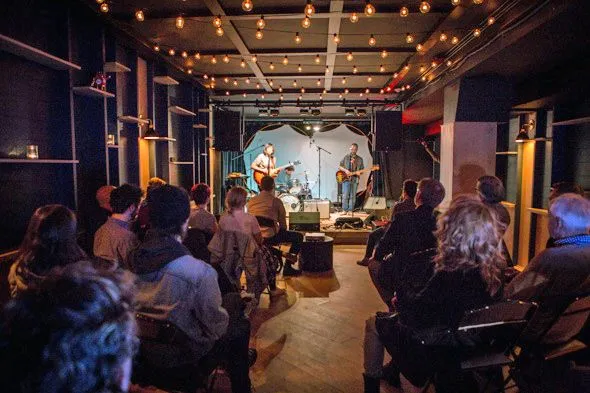
Photo: Nickelsack Jack, CC BY-SA 4.0, via Wikimedia Commons
Everybody loves to blame the algorithm. Spotify's recommendation engine, TikTok's For You page, YouTube's autoplay — these are the usual suspects when we talk about why certain music gets amplified and other sounds get buried. But there's an older, messier, and far more human system of gatekeeping that rarely gets examined: the one happening at the local level, in every American city, every single week.
We're talking about venue owners, local promoters, and talent buyers — the people who decide which artists get booked, which shows get marketed, and ultimately, which music gets a real shot at reaching a live audience. Their power is enormous. Their accountability? Almost nonexistent.
The Invisible Hand Behind the Marquee
Most concertgoers show up, buy a ticket, grab a drink, and enjoy the show. What they don't see is the months of negotiation, the back-channel texts, and the gut-feeling decisions that put that particular artist on that particular stage in the first place.
A venue's talent buyer — sometimes the owner themselves, sometimes a dedicated staffer — is essentially a one-person filter for what live music a community gets access to. In mid-sized American cities like Nashville, Denver, or Cleveland, a handful of these individuals can collectively shape the entire local music landscape. If they don't like your sound, your genre, or your vibe, you're not getting booked. It really is that simple.
And unlike a streaming algorithm, which at least pretends to operate on data, these decisions are often deeply personal. A booker who grew up on classic rock might consistently overlook emerging hip-hop artists. A promoter who has a long-standing relationship with certain management companies will naturally prioritize those rosters. None of this is necessarily malicious — it's just human nature. But the cumulative effect can be suffocating for artists who don't fit neatly into existing networks.
The Economics of the Booking Decision
Let's be real: venues are businesses. They have rent, staff, insurance, and a whole list of expenses that don't care how artistically deserving an act is. So when a talent buyer is deciding who to book, they're running a mental profit-and-loss statement in real time.
Established acts with proven draw numbers are low-risk bets. An emerging artist with a modest but passionate following? That's a gamble. And in an era where margins are already razor-thin — especially for smaller clubs and mid-tier rooms — many venues simply can't afford to take too many chances.
The result is a self-reinforcing cycle. Artists who already have some buzz get booked, which gives them more exposure, which builds more buzz, which gets them more bookings. Meanwhile, artists who are genuinely talented but haven't cracked the right networks stay stuck on the outside looking in, regardless of how many streams they have or how electric their basement shows might be.
Some venues do make a conscious effort to take risks on new talent — and those rooms often become legendary for it. Think of the storied history of places like First Avenue in Minneapolis or The Troubadour in Los Angeles. But those examples stand out precisely because they're exceptions to a much more conservative rule.
The Network Problem
Here's where things get particularly thorny. The live music industry, especially at the local and regional level, runs almost entirely on relationships. Promoters talk to other promoters. Managers have existing contacts at certain venues. Agents from the same agencies tend to cluster around the same bookers.
For artists who come from outside these established circles — whether that's because of their background, their genre, or simply their geography — breaking in can feel less like a meritocracy and more like crashing a private party where everyone already knows each other.
This isn't just anecdotal. Across the country, artists from communities of color, LGBTQ+ artists, and musicians working in genres that are perceived as niche or uncommercial have consistently reported running into invisible walls when trying to access the stages that matter. The gatekeepers themselves often don't see it as exclusion — they'd describe it as booking what they know, or what their audience wants. But the effect is the same.
When Taste Becomes Policy
One of the more uncomfortable truths about the live music world is that personal taste, when it's held by someone with booking power, essentially becomes policy for an entire community.
If the person running bookings at the most important venue in your city has a narrow definition of what's worth platforming, that narrow definition becomes the ceiling for an enormous number of artists. There's no appeals process. There's no transparency report. There's no algorithm you can reverse-engineer to figure out why you keep getting passed over.
Some cities are starting to push back on this. Community-led music organizations, independent promoters working specifically with underrepresented genres, and DIY venue collectives are all attempts to create alternative pathways to the stage. In cities like Atlanta, Chicago, and Austin, these parallel ecosystems have sometimes grown powerful enough to challenge the mainstream booking establishment on its own terms.
What This Means for Music Fans
If you care about the health and diversity of live music in your city, understanding this system matters. The shows you attend, the venues you support, and the artists you champion with your dollars and your attention all send signals into this ecosystem.
Choosing to go to a show at an independent venue that takes risks on new talent is a genuinely meaningful act. Skipping the arena show in favor of a local showcase isn't just a lifestyle choice — it's a vote for a different kind of music culture.
And if you ever find yourself wondering why the live music scene in your city feels a little samey, a little predictable, or weirdly disconnected from the rich underground culture you know exists — look past the algorithm. There's a very human set of hands shaping what ends up on that stage. Knowing they're there is the first step toward demanding something better.