The Accidental Tastemakers: How Discord Admins Quietly Became Music's Most Influential Scouts
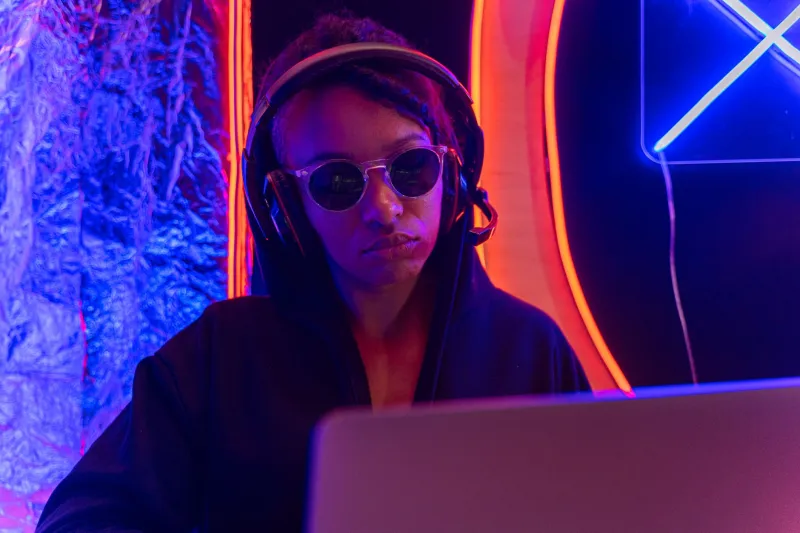
Nobody handed Marcus a title. He didn't go to Berklee. He doesn't have a corner office at a major label, and his business card — if he had one — would probably just say something like "server admin" next to a little headphone emoji. But over the past three years, the 26-year-old from Columbus, Ohio has quietly helped shape the early careers of at least a half-dozen independent artists, simply by running a Discord community dedicated to bedroom pop and lo-fi production.
"I just wanted a place where people could share music without getting roasted," he told us over a voice chat. "Now artists are DMing me asking if they can drop in the server before they release anything publicly. It kind of crept up on me."
Marcus isn't alone. Across hundreds of niche music communities on Discord — from hyper-specific sub-genres like dark ambient and hyperpop to broader scenes built around regional sounds — server admins and moderators have become something the music industry used to pay handsomely for: reliable, trusted filters. The difference is they're doing it for free, fueled by genuine passion rather than quarterly targets.
What A&R Used to Look Like — and Why It Changed
For decades, Artists and Repertoire reps were the industry's official gatekeepers. They haunted smoky clubs, sifted through demo tapes, and made calls that could turn a nobody into a somebody. The internet democratized music distribution, but it also flooded the zone. There's more music being released now than any single human being — or algorithm — can meaningfully process.
That's where community admins stepped in, almost by accident.
When you're running a Discord server of 4,000 people who all care deeply about, say, indie R&B, you develop a finely tuned ear fast. You hear what makes the room light up. You see which song drops cause the "music-sharing" channel to go from five messages a day to fifty. You learn what resonates before any data dashboard catches up.
"The analytics come after the feeling," said Priya, who manages a 7,000-member server centered on South Asian fusion music. "I know a track is hitting when the conversation in general chat just... shifts. People start talking differently. That's not something Spotify can tell you at launch."
The Unwritten Job Description
Being a Discord admin in a music-focused community comes with responsibilities nobody formally agreed to. There's the obvious stuff — keeping the peace, enforcing rules, booting bad actors. But in communities where music discovery is the whole point, admins also become curators, diplomats, and occasionally, career architects.
Many of them have developed informal vetting processes that would feel familiar to anyone who's worked in talent development. Some run dedicated "demo drop" channels where artists can share unreleased work and receive structured feedback. Others have created tiered systems — you have to be an active community member for a certain period before you can post music at all, which filters out the purely promotional drive-bys.
"We don't want the server to become a dumping ground," said Jerome, who admins a 10,000-member hip-hop production community based around East Coast underground sounds. "If the culture of the community dies, the discovery dies with it. So we protect the culture first."
That instinct to protect community integrity is, ironically, what makes these spaces so valuable to artists. A co-sign from a respected admin carries weight precisely because it's not for sale.
When the Co-Sign Actually Launches Something
The stories are starting to pile up. An admin in a folk-adjacent server shared an early demo from a then-unknown singer-songwriter from Nashville — within a week, the track had been picked up by three independent playlist curators who were also members of the server. A moderator in an electronic music community flagged a producer's debut EP in the general chat with a single message: "This one's real. Don't sleep." That producer now has a deal with a mid-size indie label.
None of these admins were compensated. Most of them didn't even think of what they were doing as scouting.
"I just thought I was sharing something I liked," said Keely, who moderates a dreamy, shoegaze-influenced server with nearly 6,000 members. "Someone messaged me later saying I'd basically changed the trajectory of their career. I didn't know what to say. I was just being myself."
That authenticity is the whole ballgame. In an era where every platform is trying to manufacture discovery moments, the ones that actually move people tend to originate in spaces where nobody's performing for an algorithm.
The Industry Is Paying Attention — Awkwardly
Label scouts and indie managers have started lurking in music Discord servers, which has created its own set of complications. Some admins have been approached directly — offered money, free concert tickets, or promotional partnerships in exchange for featuring certain artists in their communities.
Most of the admins we spoke with turned these offers down, at least initially.
"The moment I start taking money to push music, I lose the thing that makes this community worth anything," Jerome said flatly. "People trust me because I'm not on anyone's payroll. That trust is the whole product."
But the line can blur. Free merch, early access to releases, invitations to industry events — these are softer forms of influence that don't always come with explicit strings attached. Some admins are navigating this carefully; others haven't fully thought it through yet.
There's also a growing conversation within these communities about transparency. Should admins disclose when they have a personal relationship with an artist they're amplifying? A few servers have started requiring exactly that — a kind of informal disclosure policy that mirrors FTC guidelines most of these volunteers have never read.
Power Without a Playbook
What makes this whole phenomenon so fascinating — and a little precarious — is that it's entirely self-governing. There's no licensing board for Discord admins, no professional standard, no accountability structure beyond the community itself. An admin who abuses their platform can be called out, sure, but the consequences are social rather than institutional.
For most of the people in these roles, that's fine. They didn't sign up for power; they signed up because they loved music and wanted to talk about it with people who felt the same way.
But as these communities grow and the stakes around them rise, the informal is starting to brush up against the formal in ways that nobody has a clean answer for.
"I think about it sometimes," Marcus admitted. "Like, what am I actually doing here? But then someone drops a track that makes me feel something I haven't felt in years, and I share it, and the whole server goes crazy, and I remember — this is why. This is still just about the music."
Maybe that's enough. Or maybe that's exactly the kind of thing someone says right before they accidentally become the most important person in the room.