From FYP to First Deal: How Ordinary TikTok Creators Became Music's Most Powerful Tastemakers
Not long ago, breaking into mainstream music meant navigating a very specific ladder. You needed a manager who knew a producer who could get your demo to someone at a label who might — might — pass it up the chain to an A&R rep with actual signing power. That whole system, built over decades, has been quietly dismantled by people who started their careers lip-syncing in their bedrooms.
TikTok didn't just create a new marketing channel for music. It created a new class of cultural authority. And the industry, for all its resistance, had to follow.
What A&R Actually Used to Mean
For those outside the industry bubble, A&R stands for Artists and Repertoire — essentially the talent scouts of the music world. These were the people at labels responsible for finding new artists, developing their sound, and deciding what got signed and what got shelved. They had real power. They also had real blind spots.
The traditional A&R model was slow, expensive, and deeply subjective. It relied on industry connections, radio relationships, and a lot of educated guessing about what audiences might want. The filter was tight, and a lot of genuinely interesting music never made it through.
Then TikTok's For You Page happened — and suddenly, audience validation became instant, measurable, and completely decentralized.
The Creator as Curator
What makes TikTok's impact on music discovery genuinely different isn't just that songs go viral. It's who is making them go viral and why people trust it.
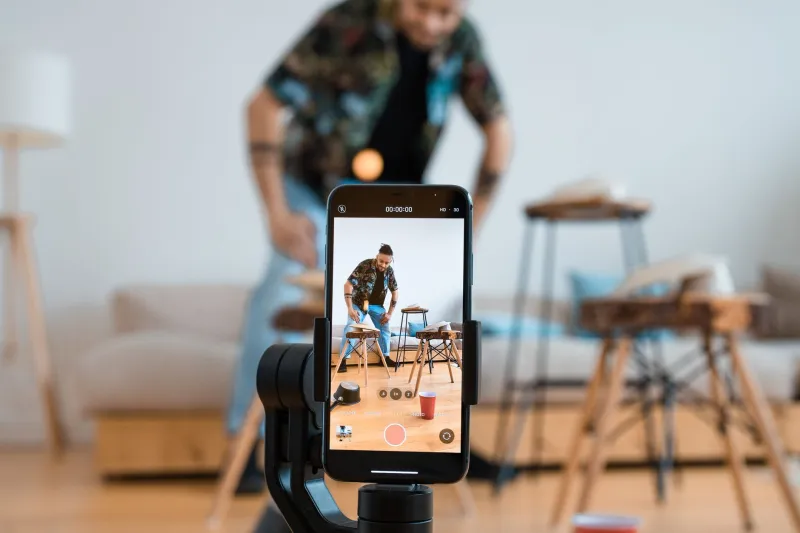
When a creator with 800,000 followers uses an obscure track as their audio — not because they were paid to, but because it actually fit the moment they were capturing — that carries a different kind of weight than a playlist placement or a radio add. It feels like a recommendation from someone you actually follow. Someone whose taste you've already bought into.
That authenticity is the whole game. And labels know it.
Creators have essentially become the new street teams, except instead of stapling flyers to telephone poles in one city, they're reaching millions of people simultaneously. The difference is the trust factor. A flyer is advertising. A creator using a song in a video that blows up feels like discovery.
Real Artists, Real Trajectories
The case studies here aren't hypothetical. Look at what happened with Tai Verdes, who was working at a Verizon store in Los Angeles when he started posting original music on TikTok in 2020. His track A-O-K built a following entirely through the platform before he signed with Hollywood Records. The label didn't find him through traditional scouting — the algorithm and creator community did the vetting first.
Or take Gayle, whose song abcdefu became inescapable in late 2021 largely because TikTok creators kept finding new angles to use it — from breakup content to comedic skits to emotional montages. The song's versatility as a sonic backdrop made it creator-friendly, and creators essentially crowdsourced its rise to a Grammy nomination.
Then there's the case of artists like Lizzy McAlpine, whose more understated folk-pop sound found a massive audience through TikTok's emotional storytelling niche — a corner of the platform that traditional radio would never have prioritized. Creators who resonated with her lyrics brought her to listeners who didn't know they were looking for exactly that.
In each of these situations, the path to mainstream recognition ran directly through creator communities, not industry pipelines.
Labels Adapting in Real Time
The major labels didn't ignore what was happening. They started monitoring TikTok trends the way they once monitored SoundScan charts. Some hired dedicated social listening teams. Others started signing artists based almost entirely on TikTok momentum, sometimes before those artists even had a full project recorded.
There's a term that floated around industry circles for a while: "TikTok famous, nowhere else." It was meant as a slight — the idea that viral success on the platform didn't necessarily translate to sustained career longevity. And that criticism has some merit. Not every artist who blows up on TikTok converts that into a durable fanbase.
But the counterargument is just as valid: plenty of artists who got traditional label pushes and radio spins also faded fast. The platform isn't the problem. The music is still the music.
What's changed is that labels can now see real-time data on how listeners are actually responding to a song — not just streams, but how creators are using it, what emotional contexts it's showing up in, how many videos are being made with a given audio. That's richer feedback than a focus group ever provided.
The Power Shift Isn't Finished
Here's what's still being worked out: the relationship between artists and the creators who champion them is complicated and largely uncompensated. A creator who genuinely loves a song and helps push it to millions of people gets nothing when that song lands a label deal or chart success. The artist benefits enormously. The creator gets... engagement on their own content, maybe.
Some artists have started acknowledging this more explicitly — shouting out specific creators who helped them, collaborating directly, building real relationships rather than just hoping for organic placement. That feels like the more sustainable model, and it mirrors how community-driven music scenes have always worked at the local level, just scaled up dramatically.
There's also the question of what happens when creator promotion stops being organic and starts being paid. Sponsored posts, label-funded campaigns disguised as authentic creator moments — the line is already blurry, and audiences are getting better at detecting it. The trust that makes creator endorsement valuable is also the thing that evaporates the moment it feels like an ad.
What This Actually Means for Music Culture
The gatekeepers didn't disappear. They just got replaced by a much larger, much more distributed group of people — and that group includes you every time you share a song, use an audio, or stitch a video with a track you love.
For music culture in America, that's genuinely interesting. Regional sounds that would have struggled to get coastal industry attention are finding national audiences through niche creator communities. Genres that don't fit radio formats are thriving because TikTok has no format requirements. Artists who look or sound or move differently than the industry mold are getting heard because the algorithm rewards engagement, not conformity.
The music industry will keep trying to figure out how to control this, how to manufacture the organic moment. Some of those attempts will work. A lot of them will be obvious and will fail.
But the underlying shift — from centralized taste-making to distributed, community-driven discovery — feels like it's here to stay. And honestly? The music is better for it.