Who Made You the Judge? Inside the Messy, Complicated World of Fan Community Self-Policing
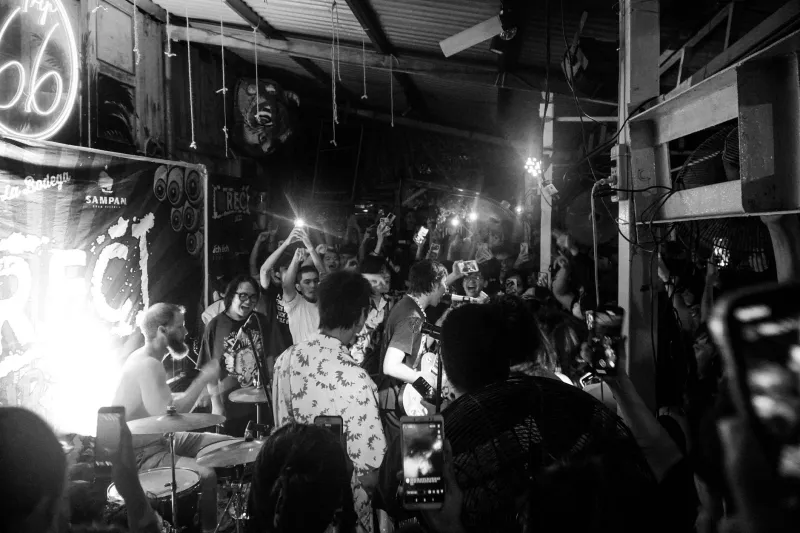
There's a moment that happens in almost every fan community, usually quietly, sometimes explosively. Someone says the wrong thing, likes the wrong post, or shows up at the wrong show in the wrong shirt. And before they've had time to process what went sideways, the thread is already running — callout posts, mass unfollows, sub-Reddit pile-ons, Discord whisper networks doing their thing.
Nobody appointed these enforcers. Nobody voted them in. But somehow, in communities built around music, art, and culture, a loosely assembled group of regulars almost always ends up functioning like an unofficial court system — with all the power and none of the accountability that implies.
So what actually happens inside these spaces when the policing goes right? And what happens when it very clearly doesn't?
The Rules Nobody Wrote Down
Ask anyone who's been deep in a niche fan community — whether that's a regional hip-hop scene, an indie folk corner of Tumblr, or a hyper-specific subgenre Discord — and they'll tell you the same thing: the rules exist, even if you can't find them anywhere.
Things like: don't stream the artist's work through certain platforms. Don't engage with the "wrong" critics. Don't ask basic questions in spaces meant for serious discussion. Don't show up to a small venue and treat it like a concert hall. These norms develop organically, passed down through tone and example rather than any formal documentation.
For the most part, that works. Communities that form around a shared passion tend to develop cultural instincts that actually do protect the thing they love. The indie record store crowd that side-eyes someone who's only there because an algorithm sent them? That skepticism, annoying as it can feel from the outside, often keeps the space from being hollowed out by casual consumers who don't invest in it.
"There's a real difference between someone who's here because they love this music and someone who's here because it went viral last week," said one Discord moderator who oversees a community built around underground electronic music in the Midwest. "We're not trying to be cruel. We're trying to keep something alive."
When Accountability Becomes a Performance
But here's where it gets complicated. Because the same mechanisms that protect a community can also become weapons — especially when the enforcement is less about values and more about social status.
Callout culture inside fan spaces operates on a sliding scale. At its most functional, it's a way for communities to name harmful behavior: someone using racist language, someone harassing artists directly, someone exploiting access for personal gain. In those cases, collective pressure can actually work better than any formal reporting system.
At its least functional, it becomes something else entirely. A way to settle old grudges. A way to test loyalty. A way to make someone feel small because they came in wrong, asked a question that was deemed too basic, or expressed an opinion that rubbed the regulars the wrong way.
One former member of a well-known indie music forum described being effectively pushed out after posting a positive review of an artist the community had decided to dislike. "I wasn't defending anyone's bad behavior," she said. "I just liked the album. And suddenly I was getting DMs, people subposting about me, the whole thing. It was exhausting."
She left. The community moved on. Whether anyone considered that a win is unclear.
The Moderator Problem
Moderators sit at the center of all of this, and their position is genuinely difficult. They're usually volunteers — fans themselves — who took on administrative roles because they wanted to help maintain something they cared about. They didn't sign up to be judges, therapists, or conflict resolution specialists.
But that's often what the job becomes.
"The hardest part isn't banning someone who's clearly being awful," said a moderator who helps run a large fan community built around a touring folk artist. "The hardest part is figuring out what to do when the community itself is being awful to someone who maybe did something kind of wrong but not wrong enough to deserve what they're getting."
That gray zone — where someone made a misstep but the punishment is disproportionate — is where most of the real damage happens. And moderators who try to pump the brakes on a community pile-on often find themselves on the receiving end of the same energy.
It's a structural problem more than a personal one. When enforcement power is distributed across hundreds or thousands of people with no formal accountability, the result is less like a justice system and more like a weather pattern. You can't negotiate with it. You can only try to get out of the way.
What Gets Lost When a Community Closes In
There's a real cost to all of this that doesn't get talked about enough: communities that police themselves too aggressively tend to stop growing in meaningful ways.
New people stop trying to join because the entry cost — social, emotional, informational — is too high. The regulars get older and more insular. The culture calcifies. And eventually, the thing that made the space worth protecting in the first place starts to fade, not because outsiders ruined it, but because the insiders ran out of fresh energy to keep it alive.
Cultural observers who study fan communities have started calling this "protective decay" — the slow collapse that happens when a community's immune system turns on itself. It's not unique to music spaces. You see it in gaming communities, in literary circles, in niche sports fandoms. Anywhere passionate people gather, the potential for this kind of slow self-destruction exists.
"The communities that stay healthy long-term are the ones that figured out how to hold people accountable without making accountability the whole personality," said one researcher who focuses on online community dynamics. "It's a balance. And it's genuinely hard to maintain."
Is There a Better Way?
Some communities have started experimenting with more intentional approaches — written community guidelines, structured onboarding for new members, explicit processes for handling conflicts before they explode into public spectacles. It's not glamorous work, and it doesn't generate the same social energy as a good callout post. But it tends to produce better outcomes.
Others have leaned into transparency as a tool: making moderation decisions visible, explaining the reasoning behind enforcement actions, creating spaces where community members can actually push back on decisions they think are wrong.
Neither approach is perfect. But both suggest that the alternative to unaccountable informal policing isn't chaos — it's just more deliberate community design.
At the end of the day, the question every fan community has to sit with is a pretty basic one: Who are we actually protecting, and from what? If the answer is "the culture, from people who don't respect it," that's a defensible position. If the answer is "our own comfort, from anyone who challenges it," that's something different.
The communities that can tell the difference between those two things tend to be the ones still standing ten years later. The ones that can't usually aren't.