Opinion Is the New Currency: How Indie Music Critics Are Reclaiming the Conversation
Here's something nobody talks about enough: the algorithm doesn't have taste. It has data. And data, for all its usefulness, cannot tell you why a record matters — only that enough people clicked on it. That distinction is exactly where a new generation of independent music critics has found its opening.
While the conversation around music discovery has been dominated by TikTok virality and Discord rabbit holes, something quieter has been building underneath all of it. A loose network of bloggers, Substack writers, and self-published critics has been slowly, steadily accumulating the kind of credibility that no playlist curator can manufacture: actual trust.
The Problem With Infinite Recommendations
We are not short on music right now. Spotify alone has over 100 million tracks. Every Friday, the new release floodgates open and swallow another week's worth of albums, EPs, and singles that most listeners will never meaningfully engage with. The streaming platforms respond to this chaos with more recommendations, more curated playlists, more "because you listened to" logic — and it mostly just adds to the noise.
The algorithm is optimizing for engagement, not enlightenment. It wants you to keep listening, not to understand what you're hearing. And a growing slice of music fans — particularly those who've already gone down the rabbit hole of underground genres and niche subcultures — are starting to feel the difference.
That's where the critics come in.
Who These Writers Actually Are
Forget the image of the jaded print journalist at a major publication. The new wave of music criticism looks a lot more like a 28-year-old in Chicago writing a weekly Substack about experimental R&B, or a duo in Brooklyn running a Bandcamp-adjacent blog that covers nothing but contemporary jazz and its adjacent mutations. These writers aren't waiting for press credentials or editorial assignments. They're just writing — obsessively, specifically, and with a point of view.
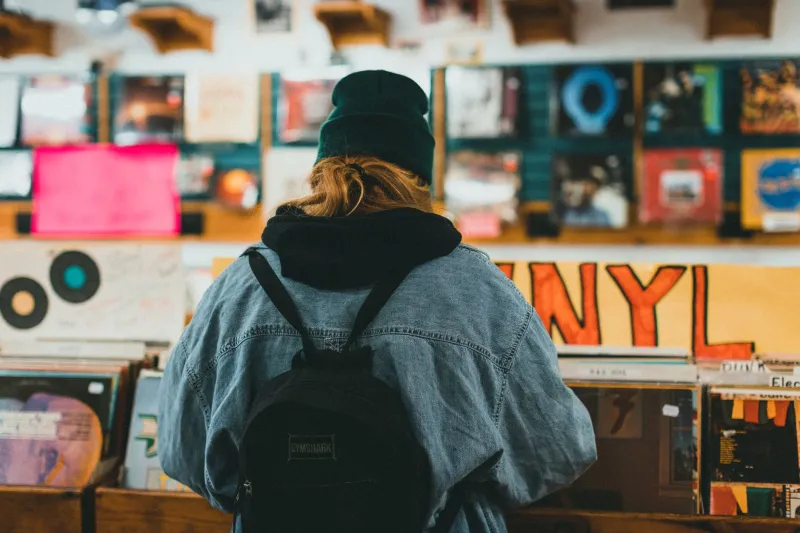
Many of them built their audiences inside the very communities they cover. They were the person in the Discord server who always had the best recommendations. They were the regular at the local record shop who could hold a 45-minute conversation about a single artist's catalog. When they started putting those opinions in writing, their existing communities followed.
What sets them apart isn't access — it's conviction. In a media landscape where hedging and aggregating have become the default, a critic who will actually tell you a record is bad, or that an overhyped artist isn't delivering, is genuinely rare. And readers are hungry for it.
The Trust Economy in Action
There's a term that gets thrown around a lot in creator economy circles: parasocial relationship. But what's happening between these micro-critics and their readers is something a little different. It's less parasocial and more collaborative — more like following a friend with impeccable taste than worshipping a celebrity.
Because these writers are so specific, their audiences self-select hard. If you're reading a newsletter dedicated entirely to the intersections of Southern hip-hop and country music, you're not there by accident. You found it because you were already looking for exactly that conversation. The result is a readership that's small but deeply engaged — and deeply trusting.
That trust translates into real influence. When a respected micro-critic covers an emerging artist, it doesn't just drive streams. It signals to other tastemakers — bookers, label scouts, playlist editors, other writers — that something is worth paying attention to. These bloggers have become, in a very real sense, the people who validate what underground communities discover before those discoveries reach wider audiences.
Making It Sustainable (Sort Of)
The money question is real. Most of these writers aren't quitting their day jobs — at least not yet. But the economics are becoming more interesting. Substack has made it possible to charge directly for access, and a newsletter with even 500 paying subscribers at $8 a month is generating meaningful income. Some critics have layered in affiliate revenue through Bandcamp links. Others have turned their credibility into consulting work, advising labels or venues on emerging talent.
A few have built enough of a platform to land brand partnerships — though the savvier ones are selective about which brands they'll work with, knowing that a single wrong move can crater the trust they've spent years building. That calculus is something the biggest media companies often get wrong, and independent critics know it.
There's also a community-building dimension that's started to pay off. Critics who've cultivated loyal readerships are hosting listening events, running live Q&As, and launching their own recommendation communities — essentially becoming the curators of curators. Their readers don't just consume their opinions; they bring their own discoveries back to the table, turning a solo writing project into something closer to a living, breathing music community.
Why This Matters Right Now
The timing isn't accidental. There's a broader cultural pushback happening against algorithmic monoculture — a growing sense that if everyone is listening to what the same system recommends, something important gets flattened. Music criticism, at its best, has always been about context: situating a record in a moment, in a tradition, in a conversation. Algorithms can't do that. They can tell you what sounds similar. They can't tell you what it means.
Independent critics can. And increasingly, people are paying for that.
The major music publications haven't disappeared, but their cultural authority has fragmented in ways that aren't coming back together. The readers who care most deeply about music — the ones who are actively seeking out something beyond the mainstream — have migrated toward writers who feel like them. Writers who have skin in the game. Writers who are just as likely to be wrong as anyone else, but who are at least willing to take a real position.
What Comes Next
None of this is a guarantee of anything. The creator economy is littered with people who built something real and then burned out, or got swallowed by a platform that changed its algorithm. Independent criticism carries all the same risks.
But there's something durable about the underlying value proposition. Human beings want to be told what to think about art — not in a manipulative way, but in the sense that they want a trusted voice to help them make sense of what they're experiencing. That need doesn't go away because Spotify exists. If anything, it gets more acute.
The gatekeepers of the gatekeepers are finding their footing. And if you haven't already found your favorite micro-critic, this is a good time to start looking.