Crate Digging Is the New Scrolling: Why Gen Z Trusts Record Store Clerks More Than Any Algorithm
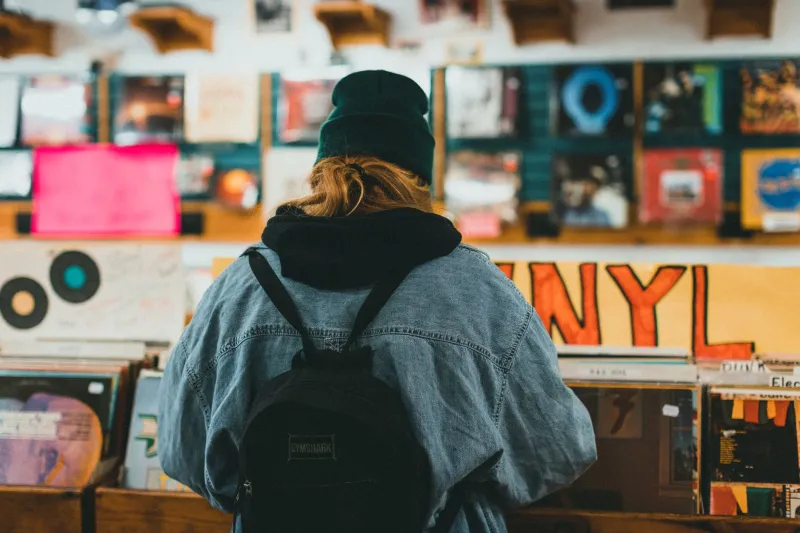
Walk into Amoeba Music in Los Angeles on a Saturday afternoon and you'll notice something that might surprise you: the place is packed with people who weren't alive when CDs were the dominant format. Flip through the bins at Waterloo Records in Austin or Earwax in Brooklyn and you'll find the same thing — twentysomethings flipping through vinyl with the kind of focused attention that's basically extinct everywhere else in their lives. No earbuds. No phones out. Just music, physical media, and the occasional conversation with whoever's working the floor.
This isn't a nostalgia trip for something they personally experienced. It's something newer and, honestly, more interesting than that.
The Algorithm Problem Nobody Wants to Say Out Loud
Streaming platforms will tell you their recommendation systems are incredibly sophisticated. And technically, they're not wrong. Spotify's Discover Weekly and Apple Music's algorithmic playlists pull from billions of listening data points to serve you something you'll probably like. The operative word there is probably. The secondary word is like — not love, not be transformed by, not stay up until 3 a.m. thinking about.
The core issue is that algorithms optimize for engagement, which really means they optimize for comfort. They push you toward things adjacent to what you already know. They're designed to keep you on the platform, not to genuinely expand your musical world. Over time, your recommendations start feeling like an echo chamber of your own taste, slightly remixed.
Gen Z — the generation that grew up entirely inside this ecosystem — has started to notice. And a meaningful chunk of them are reacting by doing something genuinely countercultural: walking into a physical store and asking a human being for help.
The Clerk as Curator
Here's what a good record store employee offers that no algorithm can: context, conviction, and a willingness to be wrong.
When a clerk at a shop like Electric Fetus in Minneapolis recommends an album, they're not running a calculation. They're telling you about something they personally believe in, something they've argued about with coworkers, something a customer came back to thank them for three weeks later. That recommendation carries weight because it comes from taste, not data.
There's also the element of genuine dialogue. You can tell a streaming service that you're "in your feelings" or "need something for a road trip," but a record store employee can read between the lines. They can ask follow-up questions. They can pull three records and explain exactly why each one might hit differently depending on your mood. That's a fundamentally different kind of discovery.
Store owners across the country have noticed the shift. Many describe younger customers who come in specifically because they're overwhelmed by streaming options — not despite it. The paradox of choice is real, and a curated physical space with a knowledgeable human at the center cuts right through it.
More Than a Store — A Third Space
What's really happening at these shops goes beyond music retail. Independent record stores have evolved into genuine community anchors, functioning as what urban sociologists call "third spaces" — places that are neither home nor work, where people gather, connect, and develop a sense of belonging.
Many shops host listening parties, in-store performances, zine swaps, and local artist showcases. Some have become de facto community boards for the local music scene, with flyers for upcoming shows covering every available wall. Others stock local releases prominently, creating a kind of feedback loop between the store, the artists, and the audience.
For Gen Z, a generation that has been loudly vocal about loneliness and the limits of digital connection, these spaces offer something genuinely rare: a place where showing up in person has real social value. You might leave with a record. You might also leave with a new friend, a show recommendation, or a conversation that reframes how you think about an entire genre.
The Discovery Moment Streaming Can't Fake
Ask anyone who's gotten deep into vinyl culture about the moment that hooked them, and you'll almost always hear about a specific discovery — a record they pulled from a bin on a whim, a staff pick they grabbed because the handwritten note on the shelf made it sound irresistible, an artist they'd never heard of whose album cover stopped them cold.
Those moments feel qualitatively different from finding something on a playlist. Part of it is the physicality: holding the record, reading the liner notes, looking at the artwork. Part of it is the element of chance. But a lot of it is the sense that you found something, rather than being fed it.
Streaming is extraordinarily good at giving you music. It's less good at giving you the feeling of discovery — that slightly electric sense that you've stumbled onto something that was waiting specifically for you. Independent record stores, almost accidentally, have cornered the market on that feeling.
Record Store Day and the Cultural Reset
Record Store Day, the annual celebration that started in 2008, has become a genuine cultural event — particularly among younger fans. The limited-edition releases and exclusive pressings are part of the draw, sure, but the lines outside stores across the country tell a bigger story. People want a reason to show up in person. They want the communal experience of being in a room full of people who care about the same thing they care about.
What started as a promotional effort to boost flagging vinyl sales has quietly become one of the more honest expressions of what music fandom actually looks like when it isn't mediated by a screen.
Trusting the Human on the Other Side of the Counter
There's something almost radical about the dynamic at the heart of this whole thing. Gen Z — the most digitally native generation in history, the cohort that grew up with infinite information at their fingertips — is choosing to trust strangers in record stores over systems built by some of the most sophisticated technology companies on earth.
But maybe it makes perfect sense. When everything is personalized and optimized and algorithmically tailored, the thing that feels genuinely different is a real human with real opinions who just really, really loves music. That's what specialty record stores have always offered. It just took a generation raised on streaming to fully appreciate how rare and valuable that actually is.
Next time you're stuck in a Spotify loop, consider taking a detour. Find your local shop, flip through some bins, and ask the person behind the counter what they've been listening to lately. You might be surprised what happens next.