One Person's Yes: How Indie Venue Owners Became the Unofficial Arbiters of American Music
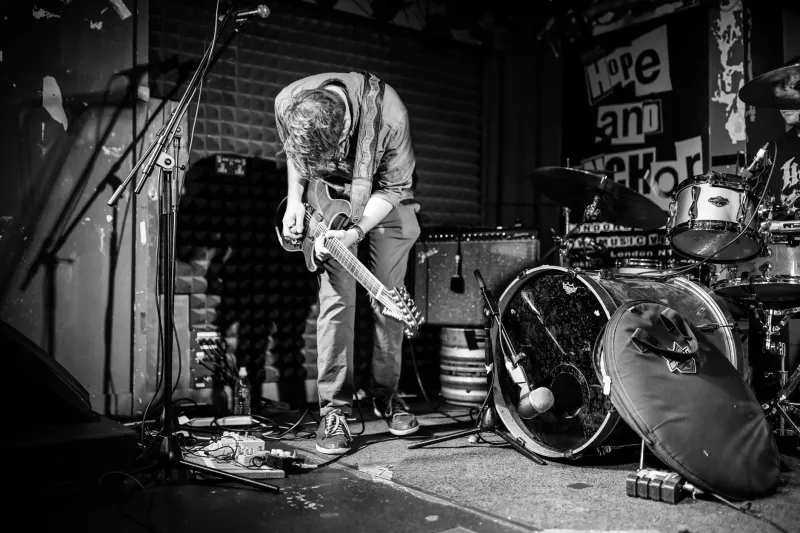
There's no application process. No rubric. No panel of judges reviewing your SoundCloud links with a standardized scoring sheet. In most cases, the decision about whether a rising artist gets to perform at an independent venue — and therefore gets taken seriously by a local scene — comes down to one person's gut feeling on a Tuesday afternoon.
That person probably owns the place.
Independent venue owners occupy one of the strangest positions in American music culture. They're not A&R reps. They're not managers or label executives. Many of them got into the business because they loved music, needed a second income, or stumbled into owning a bar that happened to have a stage. And yet, quietly and without any official mandate, they've ended up functioning as some of the most consequential tastemakers in the country.
The Booking Decision Nobody Talks About
Ask most music fans how artists get discovered and they'll mention TikTok, Spotify playlists, or maybe a well-placed sync deal. What they won't mention is the 47-year-old owner of a 200-capacity room in Nashville or Columbus or Portland who decides which acts are worth putting in front of a live audience — and which ones aren't ready, aren't right, or just don't feel like a fit.
That last part is where it gets complicated.
"I know within about two minutes of a conversation whether I want to book someone," says Marcus, who's operated a mid-sized independent venue in the mid-South for over a decade. "Part of it is professionalism — do they have their stuff together, do they communicate clearly. But part of it is honestly just whether I like what they're doing. I'm not going to pretend otherwise."
That honesty is refreshing, and also kind of alarming. Because what Marcus likes — and what the thousands of other independent venue operators across the US like — ends up shaping which artists get a foothold in the live music ecosystem and which ones stall out playing house shows indefinitely.
Local Loyalty and the Hometown Advantage
One dynamic that comes up again and again in conversations with venue operators is the role of local connection. Independent venues, by their nature, are deeply embedded in specific communities. Their owners know the local promoters, the music journalists, the booking agents who've been around forever. They have relationships — and those relationships influence decisions in ways that are rarely acknowledged.
"If someone I trust vouches for an act, that carries a lot of weight," says Dana, who books a well-regarded listening room in the Pacific Northwest. "It's not that I won't take a chance on someone I've never heard of, but when a local promoter I've worked with for years says 'you need to see this person,' I'm going to pay attention."
For artists who are already plugged into a scene, this is great news. For someone trying to break into a new city without existing connections, it can feel like a wall. The meritocracy narrative — the idea that talent will always find its audience — runs headfirst into the reality that access often depends on who you already know.
That tension isn't lost on the artists navigating it.
"I spent two years sending emails into the void," says Priya, an indie-folk artist based in Chicago who's spent the last several years building a regional following. "The venues I eventually got into weren't because my music suddenly got better. It was because I finally met someone at a show who introduced me to someone else. The music didn't change. The network did."
When Personal Taste Becomes Cultural Policy
Here's the thing about a venue owner's personal taste: it doesn't stay personal. When you're the one deciding which genres get stage time, which aesthetics feel at home in your room, and which kinds of audiences you're trying to cultivate, your preferences become a kind of informal cultural policy for your community.
Some venue operators are surprisingly self-aware about this.
"I have to actively check myself sometimes," admits Jordan, who books a historically significant small venue in the Southeast. "My instinct is to gravitate toward certain sounds — stuff that feels familiar to me. But I've had to ask myself whether I'm serving the community or just serving my own taste. Those aren't always the same thing."
Others are less conflicted. There's a subset of venue owners who wear their curatorial vision as a badge of honor — who see their room as a statement about what music matters and what doesn't. That's not inherently wrong. Curation has value. But it does mean that the cultural legitimacy a venue can confer — the signal that an artist is worth paying attention to — is being distributed based on one person's aesthetic worldview.
For artists who don't fit neatly into a venue owner's existing frame of reference, that can mean being systematically overlooked, not because the work isn't strong, but because it doesn't resemble what the gatekeeper already loves.
The Career-Defining 'Yes'
For all the complexity here, there's something undeniably powerful about what a single booking can do for an artist's trajectory.
Talk to enough working musicians and you'll hear versions of the same story: the one show that changed everything. Not because of some viral moment, but because a venue with a reputation said yes, and that yes sent a signal to everyone else in the ecosystem — agents, journalists, other venue owners — that this artist was worth watching.
"Getting booked at a certain room in this city is basically a co-sign," says Marcus. "Other venues notice. Promoters notice. I know that, and I take it seriously."
That weight cuts both ways. A 'no' from the right venue can stall momentum just as effectively as a 'yes' can build it. Artists who've been repeatedly passed over by influential rooms describe a kind of invisible ceiling — not a formal rejection, just an absence of opportunity that's hard to push through without the right relationships or the right luck.
What This Means for the Scene
None of this is new, exactly. Gatekeeping has always existed in music. What's interesting right now is the way independent venues have become more culturally significant even as the broader industry has fragmented. In an era when streaming has flattened a lot of traditional hierarchies, live music has reasserted itself as the place where credibility gets established and communities actually form.
That makes the people controlling access to live stages more influential than ever — and raises real questions about accountability. Unlike algorithms, venue owners can be talked to, reasoned with, and occasionally changed. Unlike label executives, they're often accessible to the artists they're evaluating.
But they're also operating with almost no external accountability for the choices they make. Their decisions shape scenes, influence careers, and determine which voices get amplified in their communities. And they're making those decisions based on taste, relationships, and instinct — with no requirement to explain themselves to anyone.
That's a lot of power for someone who just really loves music and happened to sign a lease on a room with good acoustics.